What is Earwax (Cerumen)?
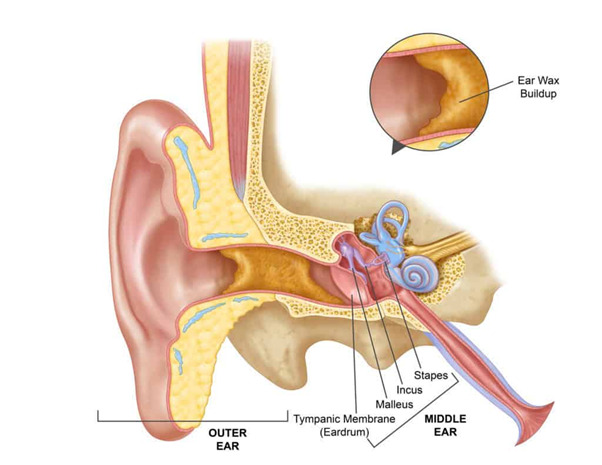
Your ears produce earwax (cerumen) through special glands situated in the outer ear canal. The wax consists of oils, skin cells and sweat. The earwax lubricates, waterproofs, and protects through antibacterial properties. This is done by coating the ear canal to form a protective layer that prevents infection and stops dust and insects from getting deep inside your ear.
The wax moves forward towards the ear canal entrance naturally, stimulated by regular jaw movements from eating and talking. This movement takes all the dirt, debris and old skin cells that have accumulated with it. Once at the ear opening it usually dries up and flakes out of your ear.
Everyone produces earwax. There is a huge variation in earwax colour and consistency that is perfectly normal and healthy. If your ears don’t have enough earwax, they’re likely to feel itchy, dry and uncomfortable and prone to infection.
Factors that increase earwax build up?
Some people naturally produce a lot of wax or produce hard and dry wax that is more prone to build-up. Other factors that can increase the chance of wax build-up include:
- People who use hearing aids or ear plugs
- People who put cotton buds or other items into their ears
- Older people
- People with developmental disabilities
- Heredity -overproduction of wax
- People with hairy ear canals or canals shaped in such a way as to interfere with natural wax removal
- bony growths in the outer part of your ear canal.
Signs and symptoms of earwax build up
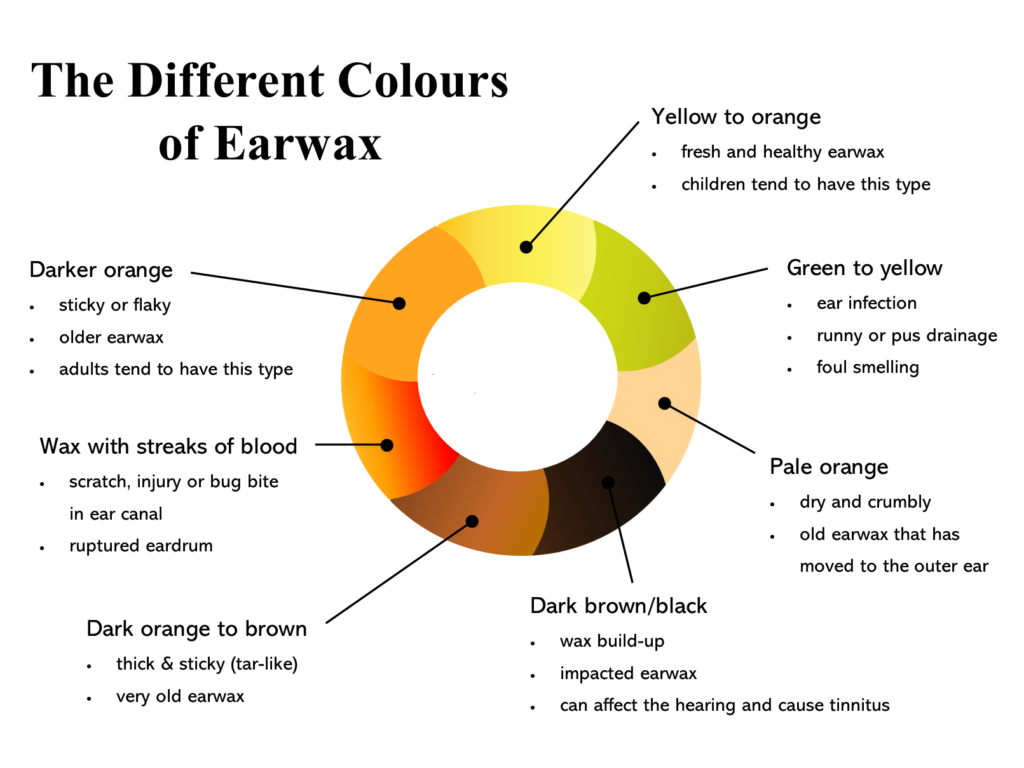
The appearance of earwax varies from light yellow to dark brown. Darker colours don’t necessarily indicate that there’s a blockage.
- A feeling of fullness in the ear
- Earache
- Difficulty hearing, which may continue to worsen
- Ringing or buzzing in the ear (tinnitus)
- A feeling of itchiness in the ear
- Discharge from the ear
- Dizziness